

Getting a bad credit mortgage
It is possible to get a mortgage, whatever your credit score. At The Mortgage Centres, our specialist bad credit mortgage advisors help you find the right path forward because your credit history isn’t your whole story.
See how much you could borrow in just minutes – NO CREDIT CHECKS!

Table of contents
11 minutes
Updated: October 1st, 2026
Bad credit mortgages: What you need to know
Can I get a mortgage?
Yes it is possible, while high-street banks may decline you, specialist lenders focus on your current affordability and the age of your credit issues rather than just a score.
How much will it cost?
Interest rates can typically be higher than the high street, and while a larger deposit increases your chances, options can start from as little as a 5% or 10% deposit depending on your circumstances.
How long does it take?
Most bad credit mortgage applications reach the “offer” stage within 4–6 weeks, provided your documentation is ready.
6 steps to securing your bad credit mortgage
Navigating the specialist market takes a different path than a high-street application. Here is what to expect in 2026:
Step 1: Comprehensive Credit Review
- What happens: We look at your multi-agency reports to identify the exact dates and amounts of any defaults or CCJs for your bad credit mortgage review.
- Timeline: 24–48 hours.
Step 2: Specialist Market Search
- What happens: We filter through “broker-only” lenders that match your specific credit profile to find the most competitive bad credit mortgage interest rates.
- Timeline: 1–3 days.
Step 3: Agreement in Principle (AIP)
- What happens: You receive a document from a lender stating they are likely to offer you a bad credit mortgage. This allows you to start making offers on properties.
- Timeline: 24 hours (once documents are verified).
Step 4: Full Mortgage Application
- What happens: Once your offer is accepted, we submit your full bad credit mortgage application and supporting documents (pay slips, bank statements) for manual underwriting.
- Timeline: 2–3 weeks.
Step 5: The Formal Mortgage Offer
- What happens: The lender completes their valuation of the property and issues a binding bad credit mortgage offer.
- Timeline: 1 week after valuation.
Step 6: Legal Completion
- What happens: Solicitors handle the final paperwork and fund transfer for your bad credit mortgage. You get the keys to your new home.
- Timeline: 4–8 weeks (depending on the property chain).
Your potential borrowing & deposit requirements
How much you can borrow depends on the property value and the ‘Loan-to-Value’ (LTV) a specialist lender is willing to offer.
How much deposit will you need?
| Property Value | 5% Deposit | 10% Deposit | 15% Deposit | 25% Deposit |
|---|---|---|---|---|
| £150,000 | £7,500 | £15,000 | £22,500 | £37,500 |
| £200,000 | £10,000 | £20,000 | £30,000 | £50,000 |
| £250,000 | £12,500 | £25,000 | £37,500 | £62,500 |
How much could you borrow? (LTV Guide)
| Property Value | 95% LTV | 90% LTV | 85% LTV | 75% LTV |
|---|---|---|---|---|
| £150,000 | £142,500 | £135,000 | £127,500 | £112,500 |
| £200,000 | £190,000 | £180,000 | £170,000 | £150,000 |
| £250,000 | £237,500 | £225,000 | £212,500 | £187,500 |
The “deposit gap”
The 5% rule: Some specialist lenders now offer 95% bad credit mortgage options even with past credit issues, provided your income is stable.
The rate drop: Increasing your deposit from 5% to 15% doesn’t just lower your loan; it can often cut your bad credit mortgage interest rate.
How much could you borrow with bad credit?
Fill out a few details to see if you are eligible for a bad credit mortgage with
NO effect on your credit score!
Prefer to speak with an expert? Call our team directly on 0330 094 5876 or request a call back today.
Specialist Lending Spotlight
- 15.2 Million People: The number of UK adults who now fall into “specialist” credit criteria. (Source: Pepper Money)
- 99% Success Rate: Almost all mortgages in this market remain up to date, proving it is a stable way to get on the ladder. (Source: FCA)
- The Human Factor: 65% of these lenders use a human being, not a computer, to review your application. (Source: 2026 Market Roadmap)
Your quick start checklist
If you’re ready to move forward, follow these three steps to get your bad credit mortgage application on the right track immediately.
1. Get Your Credit Report
Before speaking to anyone, you need to know exactly what a lender will see.
- Action: Download a multi-agency credit report (such as Checkmyfile) that shows data from Experian, Equifax, and TransUnion.
- Why: Specialist lenders often see defaults or CCJs on one agency that might not show on another.
2. Speak to a Specialist Broker
Avoid making “test” applications with high-street banks, as multiple rejections will further damage your score.
- Action: Schedule a consultation with a broker who has access to the bad credit mortgage market.
- Why: They can match your specific credit file against lender criteria before a “hard” credit search is ever performed.
3. Gather Your Documents
Specialist bad credit mortgage applications require more manual “underwriting,” so being organised is key to a fast approval.
- Action: Have the following ready:
- Last 3 months of bank statements (avoiding unarranged overdraft use).
- Last 3 months of payslips or your latest SA302/Tax Year Overviews (if self-employed).
- Proof of your deposit (savings statements or a gift letter).
Understanding bad credit
Bad credit is a record of past financial challenges that can make high-street banks view you as a higher risk. However, it is still possible to get a mortgage because specialist lenders focus on your current ability to afford the bad credit mortgage rather than just your historical credit score.
If you have bad credit, there are still mortgage options available to you. Our mortgage advisors will be able to assess your individual circumstances and recommend the best mortgage for you.
What bad credit events can I get a mortgage with?
You could still secure a bad credit mortgage if you have experienced missed payments, defaults, CCJs, or even discharged bankruptcy. Specialist lenders are often more interested in how long ago these events happened and the reasons behind them, rather than just the credit event itself.
Some events that you could still get a mortgage with are:
How do I find out if I have a low credit score?
You can find out if you have a low credit score by requesting a statutory report from the three main UK agencies: Experian, Equifax, and TransUnion, or use Checkmyfile to get all 3 reports in one place. While these scores give you a baseline, remember that mortgage lenders perform their own independent assessment based on your full financial history, not just the number shown on your app.
Lenders will contact one or all of these agencies to see your information when doing a credit check. Different lenders will interpret this data in different ways, which is why a “poor” score with one agency doesn’t automatically mean a bad credit mortgage rejection.
This table provides an indication of the health of your credit score based on the agency.
| Rating | Experian | TransUnion | Equifax |
|---|---|---|---|
| Low | 0–640 | 0–550 | 0–438 |
| Poor | 641–860 | 551–565 | 439–530 |
| Fair | 861–1,000 | 566–603 | 531–670 |
| Good | 1,001–1,120 | 604–627 | 671–810 |
| Excellent | 1,121–1,250 | 628–710 | 811–1,000 |
It is important to note that these are just guidelines, and your credit score may vary depending on the agency.
Know your borrowing potential
Your credit history isn’t your whole story.
No credit checks and only takes a few minutes!

Should I apply now or wait?
Deciding when to start your mortgage journey depends on your goals and your current credit file. Use this comparison to see which path fits your situation:
| Strategy | Apply Now | Wait & Rebuild |
|---|---|---|
| The goal | Get into your home sooner and start building equity. | Aim for a lower interest rate by improving your score first. |
| Best for | Those with a stable income and a 10–15% deposit who found a home they love. | Those with very recent credit issues (last 3–6 months) or a very small deposit. |
| Pros | Stop paying rent; house price growth benefits you; specialist rates are a “stepping stone.” | Access to a wider range of lenders; potentially lower monthly repayments. |
| Cons | Interest rates will be higher than standard high-street deals. | House prices could rise while you wait; no guarantee of “perfect” credit later. |
Not sure which path to take?
You don’t have to guess. We often work with clients for months, or even a year, before they are ready to apply. By getting in touch today, we can review your credit report together and create a personal “Mortgage Roadmap.” Whether that means applying now or setting a target for six months’ time, we’ll help you bridge the gap to a successful offer.
How to prepare for a bad credit mortgage application
To get a mortgage with bad credit, you should focus on proving your current financial stability and ensuring your credit report is as accurate as possible. Taking proactive steps to ‘clean up’ your profile before applying could increase the number of lenders available to you and potentially secure a lower interest rate.
To enhance your likelihood of approval, consider these specific actions:
Get registered on the Electoral Roll.
Being registered provides a valuable way to verify your address and identity. It is also very helpful in fraud scoring. All very important factors lenders consider during their application process.
Close any credit accounts you don’t use.
This shows responsibility to lenders, as they want to know you can manage your finances before lending to you.
Get copies of your credit report from each of the three main credit agencies.
Addressing these issues is important for anyone seeking a bad credit mortgage. From here you now have a starting point to work on to improve your credit. This can also help you find errors and have them corrected if necessary.
Create a realistic budget for your household and spend within your means.
There’s lots of information online about budgeting. You can also find plenty of free budget planners available too.
Utilise credit builder credit cards.
If you have little or no credit history these can be very beneficial to your bad credit mortgage eligibility. Even though it may seem odd to take out more credit to improve your credit score. Only utilise one if you can make your payments. If you are declined upon application do not try to re-apply as this may damage your credit even further.
If you’re struggling to improve your credit score, consider speaking with a specialist adverse credit mortgage broker. Our team of specialist brokers have a wealth of knowledge about the adverse mortgage market. We’re happy to give you friendly, honest advice about your circumstances.
How much will a bad credit mortgage cost?
A bad credit mortgage typically costs more in interest than a standard high-street deal because specialist lenders are taking on more risk. However, these higher rates are often a temporary solution, as many borrowers can switch to cheaper, traditional products once their credit score has improved over time.
When looking at the costs, there are two main factors to keep in mind:
- Higher interest rates: To offset the risk of previous credit issues, specialist rates are higher than those offered by major banks.
- Reduced borrowing power: You may be offered a lower total loan amount or be required to provide a larger deposit to secure the property.
Because every specialist lender has its own pricing structure for different credit events, it is vital to speak with a bad credit mortgage broker who can compare the entire market for your specific circumstances.
What factors affect the cost of a bad credit mortgage?
The cost of your bad credit mortgage is primarily determined by how recently your credit issues occurred and how much deposit you can provide. Generally, the longer ago the issue happened, the lower your interest rate may be.
Lenders will consider the following factors when deciding your rate:
- The number and type of adverse credit events on your credit report.
- When the adverse credit events occurred.
- Whether you have settled historical debts.
- The loan-to-value (LTV) of the mortgage.
- Your presence on the electoral register.
- Your level of debt compared to your income.
- Your employment history and residential stability.
Can I remortgage with bad credit?
Yes, you can remortgage with bad credit, especially if you have built up equity in your home to offset the lender’s risk. This can be a strategic way to consolidate debts or move from a specialist lender back to a cheaper high-street rate once your credit history has improved.
While the process is similar to a standard application, lenders will focus on the severity of your credit issues and how much equity you have in the property. Generally, an older credit event (such as a default from four years ago) may have a much smaller impact on your interest rate than a recent issue from the last six months.
You can improve your chances of a successful remortgage by:
- Making all current payments on time to show recent stability.
- Paying down existing debt to improve your affordability ratio.
- Closing unused credit accounts.
- Disputing any errors on your credit report before applying.
Remortgage Strategy: The 2-Year Rule
Aim for a 2-year fix: Many specialist borrowers take a 2-year fixed rate. This gives you exactly 24 months of “clean” mortgage payments to prove to a high-street bank that you are a reliable borrower.
The goal: After those 2 years, your goal isn’t just to stay with a specialist; it’s to use that history to qualify for a standard, cheaper interest rate.
First-time buyer bad credit mortgages
First-time buyers can secure a mortgage with bad credit by using specialist lenders who look beyond automated credit scores to assess your actual affordability. While you may need a slightly larger deposit than a standard applicant, being a first-time buyer does not automatically disqualify you from the specialist bad credit mortgage market.
Most high-street banks rely on strict “pass/fail” computer checks that often reject those with even minor credit issues. However, there are many specialist providers who manually review your application, allowing a mortgage broker to present your circumstances in the best possible light before it is submitted.
What if I have little to no credit history?
Having little to no credit history (often called a “thin file”) does not automatically stop you from getting a mortgage, provided you can prove your income and current financial stability. Specialist lenders often use “manual underwriting,” where a human reviews your application instead of relying on an automated credit score.
While high-street banks may struggle to assess you without a long borrowing history, specialist providers look at other factors like your employment record and bank statements to determine your suitability. We can help you find lenders who prioritise your current financial behaviour over a lack of past credit accounts.
Getting a self-employed bad credit mortgage
You could secure a mortgage if you are self-employed with bad credit by using specialist lenders who assess your business’s net profit rather than just a personal credit score. While most high-street banks require a clean credit history and three years of accounts, specialist providers can often offer a mortgage with just 12–24 months of trading history.
To increase your chances of success, it is important to demonstrate that your business is stable and that any past credit issues are behind you. We can help you navigate this by accessing “broker-only” deals that are specifically designed for self-employed individuals with complex credit profiles.
To prepare your application, you should aim to provide:
- Tax calculations (SA302s): Ideally covering the last 2–3 years, though some lenders accept less.
- Evidence of future work: Proving ongoing contracts or a healthy pipeline of work can reassure lenders of your long-term affordability.
- A larger deposit: Providing 15% or more can often offset the combined risk of self-employment and a low credit score.
The net profit focus
Retained Profit: Specialist lenders look at your net profit, not just turnover. If your accountant has worked hard to minimise your profit for tax reasons, it may reduce how much you can borrow. Always check your SA302 figures before applying.
Buy-to-Let bad credit mortgages
You could secure a Buy-to-Let mortgage with bad credit by accessing specialist lenders who prioritise the rental income potential of the property over your personal credit score. While most high-street banks require a clean credit record for landlords, the specialist market has expanded to offer deals for those with past CCJs, defaults, or DMPs.
Because these products are often exclusive to professional brokers, they are not typically advertised to the general public. To qualify, you will generally need a minimum deposit of 25% and a clear breakdown of your projected rental income to prove the investment is viable.
When applying for a specialist Buy-to-Let mortgage, lenders will consider:
- The property’s yield: Is the rent high enough to cover the mortgage and any potential interest rate rises?
- The type of credit event: How much was involved and how long ago did it occur?
- Your experience: Are you a first-time landlord or do you have an existing portfolio?
Can I get a Right to Buy bad credit mortgage?
Yes, you could get a Right to Buy mortgage with bad credit, and in many cases, you can use your council discount as your full deposit. While high-street lenders may decline you for past credit issues, specialist lenders are often happy to help as long as the discounted purchase price provides enough security for the loan.
Like any specialist mortgage, the lender will still look at the severity of your credit history and how recently the events occurred. While you may be offered a higher interest rate than a standard applicant, the significant equity provided by your Right to Buy discount often makes these applications much more likely to be accepted.
Bad credit mortgage lenders
Specialist bad credit mortgage lenders are firms that manually assess your application instead of using a standard “computer says no” scoring system. They are designed to help borrowers who have been declined by high-street banks due to past financial issues or complex income.
Because these lenders often only work through professional intermediaries, you generally need a specialist broker like us to access their products and criteria.
Lender secrets: The “human” advantage
DO provide a “Letter of Explanation”: If a life event (divorce, illness) caused your credit dip, a written letter can often override a computer’s rejection.
DON’T apply to multiple lenders at once: Each “Hard Search” drops your score. A broker picks the one lender most likely to say yes to protect your file.
What do mortgage lenders look for in your credit score?
Lenders primarily look for a consistent “repayment habit” over the last 12–36 months to ensure you can afford a mortgage today. While they will see older issues like CCJs or bankruptcies on your file, they are most concerned with your current debt levels and any recent credit applications.
They will also check:
- Stability: How long you’ve been at your job and your current address.
- Debt-to-income: How much of your monthly pay is already committed to other loans or credit cards.
Who are the best bad credit mortgage lenders?
The “best” lender is simply the one whose specific criteria match your credit history and deposit size at the lowest possible interest rate. Because every specialist lender has different rules for different credit events, a “best” list changes based on whether you need a bad credit mortgage for a default, a CCJ, or a past bankruptcy.
However, some of the leading specialist lenders we work with include:
Lender comparison: High street vs. specialist
| Feature | High Street Banks (Standard) | Specialist Lenders (Adverse) |
|---|---|---|
| Decision Process | Automated: A “Pass/Fail” computer algorithm. | Manual: A human underwriter reviews your whole story. |
| Credit History | Strict: Usually require a near-perfect score. | Flexible: Accept past CCJs, Defaults, and IVAs. |
| Income Type | Standard: Focus on stable, PAYE salary. | Complex: Accept self-employed (1 yr), bonuses, and benefits. |
| Employment | Rigid: Often require 3–6 months in a current role. | Adaptive: Can consider those recently started or in probation. |
| Deposit | Low: Often have 5% deposit options. | Variable: Usually 10%–15%+ depending on credit severity. |
Do I have to stay with a bad credit mortgage lender?
No, a bad credit mortgage is usually a temporary stepping stone that you can move away from once your credit score has recovered. Most borrowers aim to switch to a cheaper high street lender after 2–3 years of clean repayment history.
To make this transition successful, you must:
- Maintain all payments: Keep up with your mortgage and all other household bills.
- Avoid new debt: Limit new credit applications while you are rebuilding your score.
Using a mortgage broker for a bad credit mortgage
A specialist mortgage broker acts as an intermediary, giving you access to “broker-only” lenders that do not deal directly with the general public. We identify the specific lenders most likely to accept your credit history, saving you from making multiple applications that could further damage your credit score.
As a whole-of-market mortgage broker, we have a comprehensive view of the market. This allows us to compare both high street and specialist products to find the most competitive bad credit mortgage interest rates for your unique circumstances.
How does a broker help you with your application?
A broker manages the entire application process by matching your financial profile to a lender’s specific “appetite” for risk. We ensure your case is presented in the best possible light, addressing any past credit issues upfront to increase your chances of a formal mortgage offer.
During your consultation, we will specifically address:
- Your credit history: We’ll look at the details of any CCJs, defaults, or bankruptcies to find the right lender match.
- Loan-to-Value (LTV): We calculate how your deposit size impacts your eligibility and interest rate.
- Income & affordability: We help you navigate complex income types, such as self-employment or bonuses, that high-street banks often struggle with.
- Property suitability: We check that your chosen home, whether it’s a standard house, a high-rise flat, or a non-standard construction, meets the lender’s criteria.
Fees & costs: Why we have a fee
Specialist situations need a dedicated advocate, not just an automated search. While “fee-free” brokers focus on “perfect” applicants, we provide access to specialist lenders where our fee reflects the manual work and expertise needed to turn a “no” into a “yes.”
1. Free consultation
We review your situation and provide expert advice at our own risk. We never charge a fee just to discuss your options.
2. We prove our value first
- Success-based: Fees are only payable once you decide to move forward with an application.
- Manual advocacy: We package your case specifically for an underwriter to ensure the highest probability of success.
3. Understanding specialist rates
- Higher risk, higher rates: Adverse credit lenders charge more than the high street, but we search for the most competitive deal available to you.
- The long-term goal: Think of this as a stepping stone. Secure your home now, improve your credit, and move to a cheaper rate in the future.
You aren’t alone in this market. FCA data shows that 99% of mortgages taken out since 2014 remain up to date with payments – proving that specialist lending is a stable, well-regulated way to get on the property ladder.
Find out your credit score today!
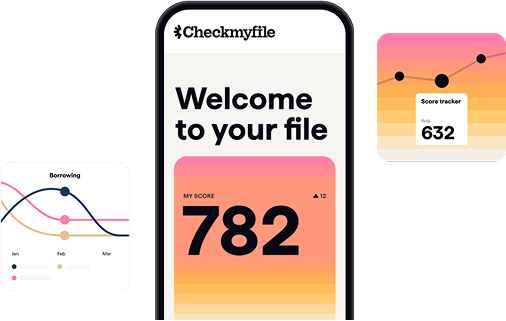
Lenders rarely look at just one score; they compare data across multiple agencies. To get the most accurate picture of your mortgage options, we recommend viewing your multi-agency report from Checkmyfile. Start your 7-day FREE trial today (£14.99/month after trial, cancel anytime).
We may earn a small commission from some links on this page, but we only recommend services we genuinely trust to help our clients.
FAQs: Bad credit mortgages
If you’re careful with your overdraft and use it responsibly when you need to, then it shouldn’t have an impact. However, if you are often on the limit of your overdraft, then that might have an impact on how a lender views your creditworthiness.
No, this will not impact your credit records in reference to any loans, credit cards, or mortgages you have taken out yourself. This is because, generally, things are treated individually.
If credit accounts are taken out jointly, your partner’s poor credit history could impact how lenders view you. They may decline an application or accept it with a higher rate of interest.
If you are making a joint application for a mortgage, then lenders will take both of your credit histories into account. The acceptance of your application depends on a range of factors. This can include the severity of the event, how much time has passed, and the borrowing behaviour since it occurred.
Some lenders will accept people who have a discharged bankruptcy, CCJs or an IVA. These specialists take more into account than the simple facts and figures, understanding that people and circumstances can change.
For another handy guide on bad credit mortgages, please check out this handy article.
About the author

Phil Scott: Director
Phil Scott is the Founder and Managing Director of The Mortgage Centres, one of the UK’s leading independent, whole-of-market mortgage brokerages. With over 30 years of experience and a network of specialist branches, Phil has built a firm defined by manual advocacy and comprehensive market access.
Under his leadership, The Mortgage Centres provides high-touch advisory services for the full spectrum of UK borrowers – from standard residential moves for first-time buyers to complex specialist lending for portfolio landlords. Phil’s institutional approach ensures that every client receives a level of scrutiny and lender access that automated platforms cannot match.
Qualifications:
- FCA Regulated: Leading compliant, high-trust advice since 1992.
- Financial Planning Certificate: 1, 2 & 3 | Year Attained: 1992
- Certificate in Mortgage Advice and Practice (CEMAP) | Year Attained: 2001
Let's talk
Our team will aim to get back to you within 24 hours.
0330 0945876 local rate.
[email protected]
"*" indicates required fields